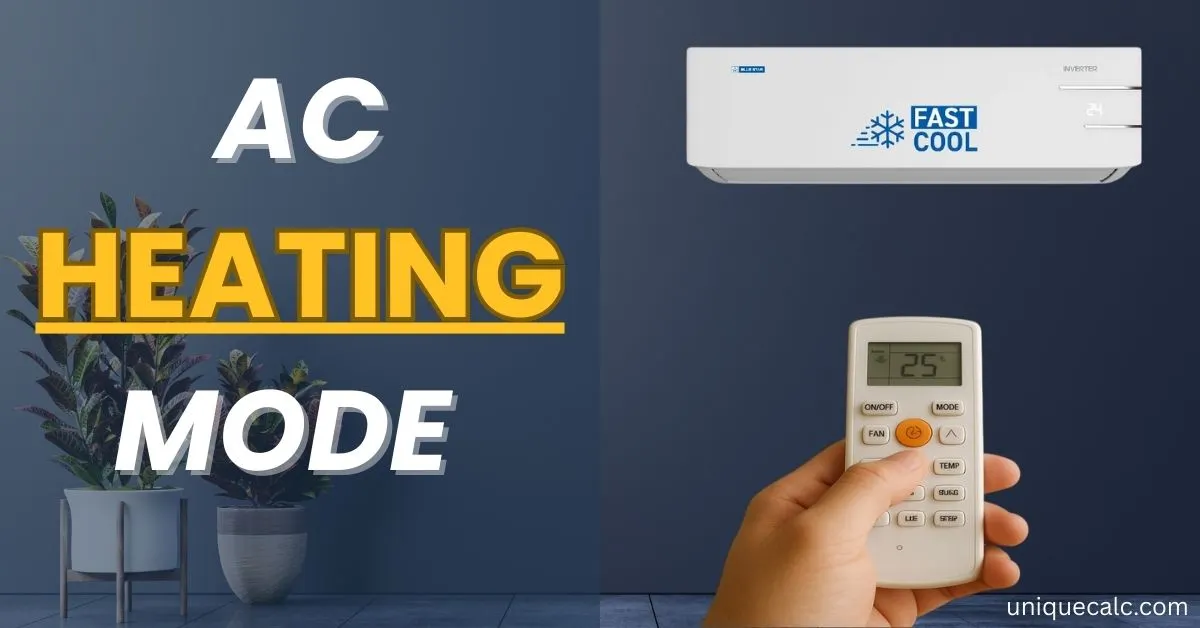
If you are asking a question like How to Use AC as Heater in Winter, then it is quite common. Many people are unsure how to use heater in AC or whether can we use AC as room heater in winter night. We already have an inverter or split AC at home, so there is no need to spend money on buying a separate heater. But if there is a HEAT mode or ☀️ sun symbol on the remote of your AC, then your AC can work like a heater and sometimes even save more electricity than a simple rod or blower heater.
I myself tried this method last winter at home to check how to use inverter AC in winter. In a small and well-closed room, the AC gave a good boost. The air gradually warmed, and the room started to feel comfortable. But before starting the setting mode, it is necessary to know some important things; otherwise, the expected results will not come.
Can Every AC Heat the Room?
Not really. Only certain types can:
| AC Type | Works for Heating? |
|---|---|
| Split/Inverter AC with Heat Mode | ✅ Yes |
| HVAC / Heat Pump Systems | ✅ Yes |
| Window AC (Cooling Only) | ❌ No |
| AC Remote Shows “HEAT” or ☀️ | ✅ Most likely |
| Only Cool, Fan, Dry Options | ❌ No Heating Feature |
If your AC remote doesn’t show HEAT mode or a sun icon, that means your AC is designed only for cooling.
Also Read: Do Air Conditioners Purify Air?
How to use AC as heater in winter (Simple Guide)
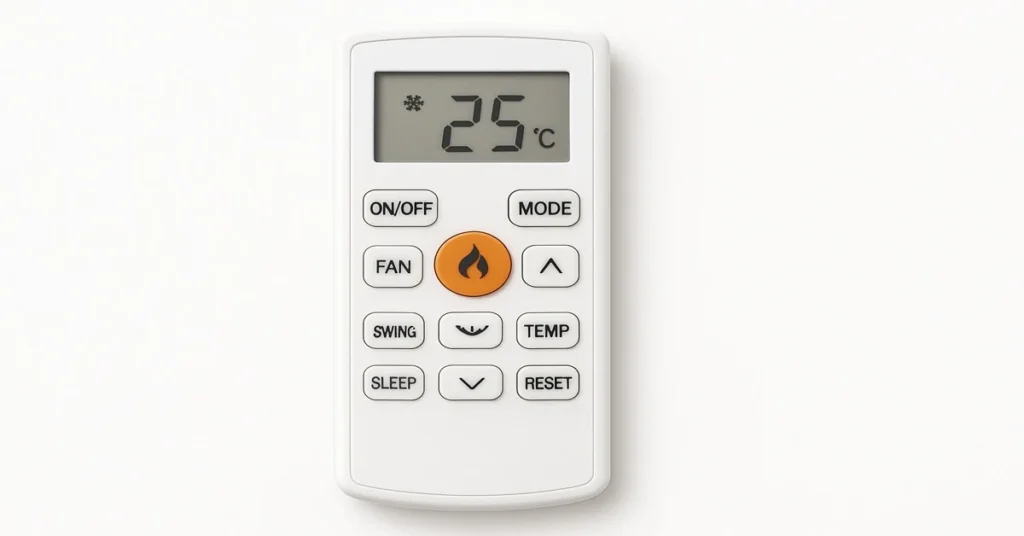
Using the Remote
- Switch on the AC using the Power button.
- Press the Mode button repeatedly until you see HEAT or ☀️ symbol on the display.
- Set the temperature between 24°C and 26 °C. This feels cozy without making the room too stuffy.
- Wait for 1–3 minutes. At first, the air might feel cold – don’t worry, the Air Conditioner is reversing its cycle.
- Turn on Swing mode to evenly spread warm air across the room.
Here is exactly how to turn on winter mode in AC. Many people search for “winter mode” in the AC remote, but the correct name is Heat Mode.
How Does It Actually Heat the Room?
An AC with a heating mode acts like a heat pump. This means that instead of consuming electricity to generate heat (as coil heaters do), it draws heat from the outside air and moves it indoors. Even in winter, there is some heat energy in the air—your AC just moves it.
This is the reason why split and inverter ACs tend to consume less electricity than regular electric heaters, especially in small, closed rooms. In my case, the increase in my bill was not as significant as it would be with a rod or blower heater.
Also Read: Air Cooler vs Air Conditioner
Best Temperature Settings for Indian Homes
| Weather Condition | Ideal Temperature Setting |
|---|---|
| Mild Winter Days | 23–24°C |
| Cold Nights (North India) | 24–26°C |
| Very Cold (Shimla, Kashmir) | 26–27°C + Blanket |
Keeping it above 27°C usually doesn’t warm faster – it just increases electricity use.
Tips to Make Heating Faster and Save Power
- Shut all doors and windows tightly.
- Cover small gaps using cloth or tape to prevent warm air from escaping.
- Use thick curtains or door draft stoppers if possible.
- Clean AC filters every 2–3 weeks for better airflow.
- Turn on the ceiling fan at a low speed to gently circulate the warm air downward, as warm air naturally rises.
- Choose a smaller room if you stay in a large house or joint family — it heats faster and uses less power.
Also Read: Can Low Voltage Damage Air Conditioner?
Pros and Cons of Using AC for Heating
| ✅ Benefits | ⚠️ Things to Keep in Mind |
|---|---|
| No need to buy a separate heater | Doesn’t work on older or window ACs |
| Warm air spreads evenly in the room | The outdoor unit may frost in extreme cold |
| Safer – no burning coils or suffocation | Works best in well-sealed rooms |
| Can be energy-efficient compared to electric heaters | Very low outside temperatures may reduce performance |
Realistic Expectations (Important)
- Works great for small to medium-sized rooms.
- In extremely cold places (below 5°C), the outdoor unit may develop frost, and heating can slow down.
- Some ACs automatically activate defrost mode – a “df” symbol may appear, and warm air stops temporarily. It’s normal.
Can We Use AC as Room Heater?
Yes, we can use AC as a room heater, but only if it has the facility of heat mode.
Modern split and inverter ACs use heat pump technology. Instead of generating heat directly like a simple rod heater, this AC brings the heat from the outside air into the room. Therefore, this option is safer and many times reduces electricity costs.
But window ACs, which are designed only to provide cool air, do not have the facility of heating, so they cannot work as a heater.
FAQ
Can we use AC as room heater?
Yes, if your AC has a heat pump feature, it can effectively heat small to medium-sized rooms. With the help of heat pump technology, it brings in the heat from the outside air and creates a comfortable temperature in the room.
How to use AC for heat in winter?
Select the heat mode, keep the temperature between 24 and 26 degrees Celsius, close the doors and windows of the room properly, and wait 2 to 3 minutes for the fresh air to start.
What is the 3-minute rule for AC?
The 3-minute rule suggests that you should not turn your AC on straight after turning it off. The compressor will take a minimum of 3 minutes to equalize its internal pressure. Turning it back on too early could lead to compressor damage, a decrease in its life span, and increased energy use.
Why is my AC not heating in winter?
This could be caused by a dirty filter, ice buildup on the outdoor unit, or the outside temperature being too low.
Can I run my AC on dry mode all day?
The intention of dry mode is only to take out the excess moisture in the air, not to warm the room. An all-day run in winter would make the air too dry and harsh for skin and throat. Instead of dry mode, it is better to use heat mode for warming up and use dry mode for very short periods only when the humidity is high.
Final Thoughts – How to Use AC as Heater in Winter
If your AC is equipped with heat mode, you actually do not have to purchase a room heater to heat your room. Just ensure that the room is tightly closed, set the temperature to about 24–26°C, and let it run for a few minutes.
I have been following this method for 2 winters now, and it has really worked well for bedrooms and small living areas.
