
If you’ve ever wondered, “What is a mini split heating and cooling system, and why is everyone talking about it in 2026?” — you’re not alone. These systems have quickly become one of the most popular HVAC solutions worldwide, especially for homeowners looking for energy efficiency, flexibility, and modern comfort.
In this beginner-friendly guide, you’ll learn exactly how mini split systems work, their components, how they compare to central AC, and whether they’re worth your investment.
What Is a Mini Split Heating and Cooling System?
A mini split heating and cooling system is a ductless HVAC system that provides both heating and cooling without requiring traditional ductwork.
Instead of pushing air through ducts like central air conditioning, mini splits deliver conditioned air directly into specific rooms or zones. That’s why they’re often called ductless mini split systems.
They work using heat pump technology, which allows them to cool your home in summer and heat it during winter.
Why People Love Mini Splits in 2026
- No ductwork needed
- High energy efficiency
- Zoned temperature control
- Easy installation
- Lower energy bills
Think of it as a smarter, more targeted version of your traditional AC — without the energy waste.
Also Read: Carrier AC Remote Control Not Working?
Key Components of a Mini Split System
A mini split system may look simple, but it has two main parts working together seamlessly.
#1. Indoor Unit (Air Handler)
The indoor unit mounts on your wall, ceiling, or floor. This is the part you see inside your room.
What it does:
- Blows cooled or heated air into the room
- Contains evaporator coils
- Includes filters to improve air quality
Modern indoor units also come with:
- Smart controls (Wi-Fi, app-based control)
- Quiet operation (often under 30 dB)
- Sleek, minimal designs
#2. Outdoor Compressor Unit
The outdoor unit sits outside your home, similar to a traditional AC condenser.
What it does:
- Compresses refrigerant
- Releases or absorbs heat
- Powers the cooling/heating cycle
The indoor and outdoor units connect via refrigerant lines and electrical wiring.
How Does a Mini Split System Work?
Mini splits use a refrigeration cycle, just like standard air conditioners — but more efficiently.
Cooling Mode:
- The indoor unit absorbs heat from your room
- Refrigerant carries the heat to the outdoor unit
- The outdoor unit releases heat outside
- Cool air circulates back into your room
Heating Mode:
The process reverses. The system pulls heat from outside air (yes, even in cold weather) and brings it indoors.
Also Read: AC Tonnage Calculator
Mini Split vs Central AC: What’s the Difference?
Let’s break it down clearly.
| Feature | Mini Split System | Central AC System |
|---|---|---|
| Ductwork | Not required (ductless design) | Required (uses full duct system) |
| Energy Efficiency | High (no duct losses, inverter-based) | Moderate (duct losses up to 20–30%) |
| Installation | Easier and faster (minimal wall drilling) | Complex (requires ducts and professional setup) |
| Cooling Control | Zoned (room-by-room control) | Centralized (same temp for entire house) |
| Upfront Cost | Higher initial cost | Lower if ducts already exist |
| Running Cost | Lower due to efficient operation | Higher due to energy loss |
| Best For | Apartments, small homes, offices | Large homes with existing ductwork |
| Noise Level | Very quiet (indoor unit is silent) | Moderate (airflow + duct noise) |
| Flexibility | Highly flexible (add units per room) | Limited flexibility |
| Maintenance | Simple (clean filters regularly) | More complex (duct cleaning required) |
Real-Life User Experiences with Mini Split AC Systems (2026)
Understanding what is a mini split heating and cooling system is becomes much easier when you look at how real people use it in daily life. Based on verified customer reviews and real usage experiences, here’s what homeowners are actually seeing in 2026.
#1. Energy Savings Are Real (But Depend on Usage)
Many users reported noticeable savings on electricity bills after switching to inverter-based mini split systems.
For example, one user reported that their 1-ton unit consumed roughly 1 unit of electricity in about 45 minutes, which is considered efficient for regular home use. Others also confirmed that inverter technology helps stabilize power consumption after the initial startup phase.
Practical insight: Mini splits save energy mainly because they adjust compressor speed instead of constantly turning on and off like traditional ACs.
#2. Cooling Performance: Fast for Some, Average for Others
Cooling performance received mixed feedback across brands.
- Some users praised features like “VIRAAT mode” and fast cooling in smaller rooms
- Others reported slower cooling, especially when:
- The room size was too large
- Installation was not done properly
Real-world truth: Cooling depends heavily on correct capacity (tonnage) + proper installation, not just the brand.
#3. Quiet Operation Is a Big Advantage
One of the most consistent positives across brands was low noise levels.
Users frequently mentioned:
- “Almost silent after a few minutes.”
- “Completely quiet in sleep mode.”
This makes mini splits ideal for:
- Bedrooms
- Home offices
- Study rooms
#4. Installation Quality Matters More Than the AC Brand
This is where things get interesting — and important.
Many users didn’t complain about the AC itself… but about installation issues:
Common problems reported:
- Overcharging for copper pipes
- Poor vacuuming during installation
- Missing components not disclosed
- Untrained technicians
One user even warned: Always open the box before installation and verify all components like copper piping.
Expert-level takeaway (you’ll like this as an engineer): Improper vacuuming can leave moisture and air inside the system, which directly reduces cooling efficiency and long-term performance.
#5. Common Problems Users Faced
No product is perfect. Here are the real issues users reported:
- Gas leakage due to damaged coils (rare but serious)
- Missing parts like copper pipes
- High noise in some budget models
- Remote or accessory defects
- Delayed service support
Important: Most of these issues were linked to installation or quality control, not the core mini split technology.
#6. Value for Money: Depends on Expectations
User opinions on pricing were mixed:
- Some found it worth the investment due to performance and efficiency
- Others felt it was overpriced, especially after additional installation costs
Reality check:
Mini split systems often have hidden costs like:
- Extra piping
- Stand installation
- Electrical work
What You Should Learn From Real Users
If you’re planning to buy a mini split system, here’s the practical advice based on real experiences:
- Always choose the correct tonnage for your room
- Ensure proper vacuuming during installation
- Check all parts before installation begins
- Don’t ignore installation quality — it affects performance more than the brand
- Be prepared for extra installation costs
Final Insight (Engineer-Level Understanding)
From a technical perspective, most real-world issues are not due to the mini split system design, but due to:
- Poor installation practices
- Lack of proper system evacuation (vacuuming)
- Incorrect sizing
In simple terms:
A well-installed mini split system performs excellently.
A poorly installed one will disappoint — even if it’s a premium brand.
Also Read: Top 5 Best Small Air Conditioner for Small Room
Benefits of Mini Split Heating and Cooling Systems
#1. Energy Efficiency
Mini splits avoid duct losses, which can account for nearly 30% of energy consumption in traditional systems.
This translates directly into lower electricity bills.
#2. Zoned Comfort
You can control the temperature in the room.
No more arguments about whether the living room is too cold or the bedroom too hot.
#3. Easy Installation
Most installations require just a small hole in the wall for the conduit.
No major renovation needed.
#4. Quiet Operation
Mini splits operate much more quietly than traditional AC units.
Perfect for bedrooms, offices, and study spaces.
#5. Heating + Cooling in One System
Unlike traditional AC units, mini splits also provide heating.
That makes them a year-round solution.
Are Mini Splits Worth It in 2026?
Short answer: Yes, for most people.
But let’s keep it real.
Best For:
- Small to medium homes
- Apartments
- Home offices
- Renovations without ductwork
- Energy-conscious homeowners
Not Ideal For:
- Very large homes needing whole-house coverage (unless multi-zone systems are used)
- People looking for the cheapest upfront option
Also Read: How to Use AC as Heater in Winter
Top Mini Split AC Units (Best Picks for 2026)
Here are some of the best options available right now. These are excellent choices if you’re planning to invest in a mini split system.
#1. LG Convertible Inverter Split AC
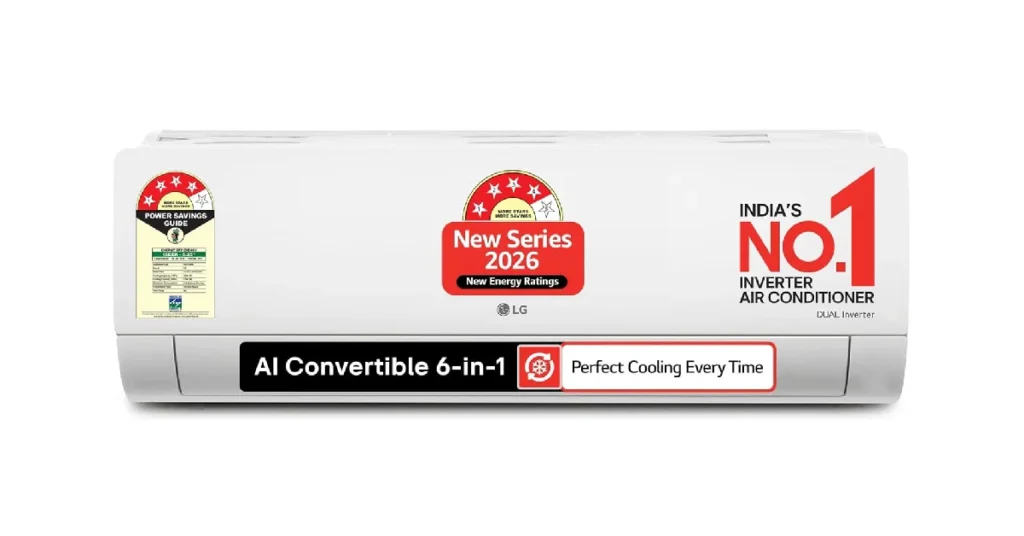
The LG Convertible Inverter Split AC is a premium mini split system designed for efficient and intelligent cooling. It uses a dual inverter compressor to adjust power based on room conditions, helping reduce electricity consumption significantly. With AI-based cooling modes and anti-virus filters, it delivers both comfort and cleaner air.
Key Features:
- Dual inverter compressor
- Convertible cooling modes
- Anti-virus protection filter
- Low noise operation
Pros:
- Highly energy efficient
- Trusted brand reliability
- Smart features included
Cons:
- Slightly premium pricing
Best For: Smart homes and users who want advanced features with reliability
#2. Midea Inverter Split AC
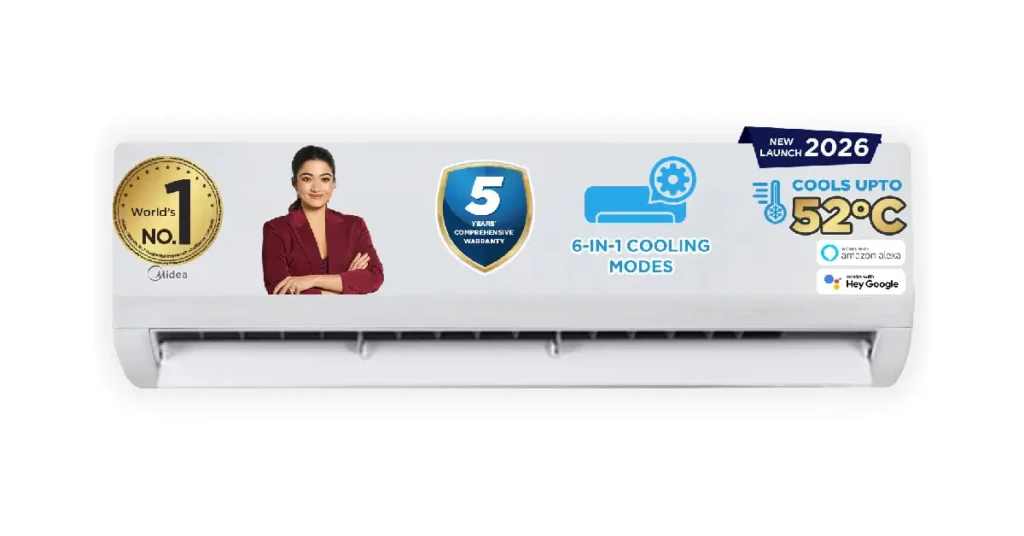
The Midea Inverter Split AC offers reliable cooling performance at an affordable price point. It features inverter technology that maintains steady temperature while reducing power consumption. With a durable copper condenser and basic filtration, it provides dependable everyday cooling.
Key Features:
- Copper condenser
- Convertible cooling
- Dust filter
- Energy-saving inverter
Pros:
- Affordable pricing
- Good efficiency
- Reliable cooling
Cons:
- Fewer smart features
Best For: Budget-conscious buyers
#3. Panasonic Convertible Split AC
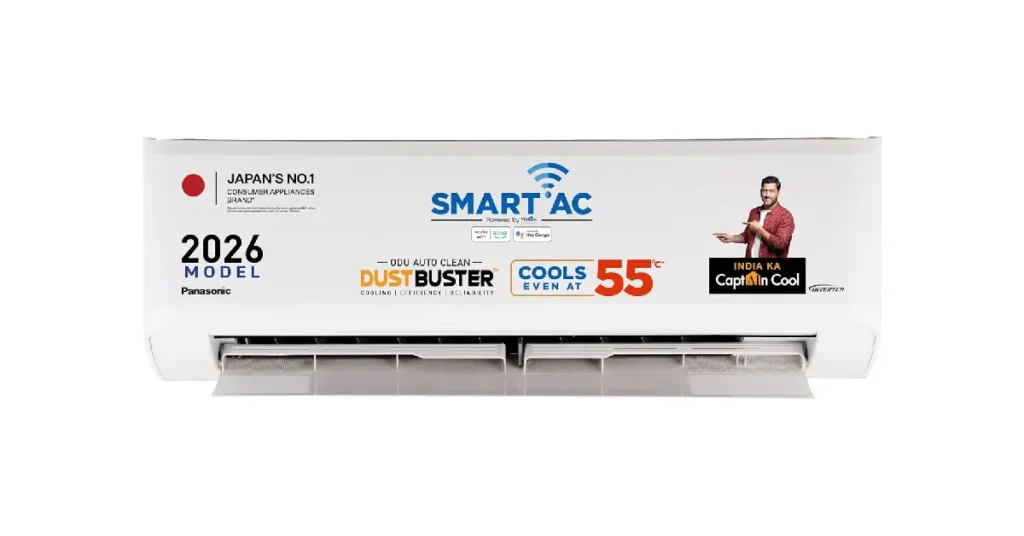
The Panasonic Wi-Fi Inverter Split AC is a smart mini split system built for modern homes. It includes advanced air purification technology and app-based controls for convenience. With powerful cooling and intelligent modes, it balances comfort, health, and energy efficiency.
Key Features:
- DustBuster technology
- Wi-Fi smart control
- Convertible modes
- Powerful cooling
Pros:
- Excellent air quality features
- Strong performance
- Smart connectivity
Cons:
- Higher cost
Best For: Health-conscious users and smart homes
#4. Haier Intelli Convertible Split AC
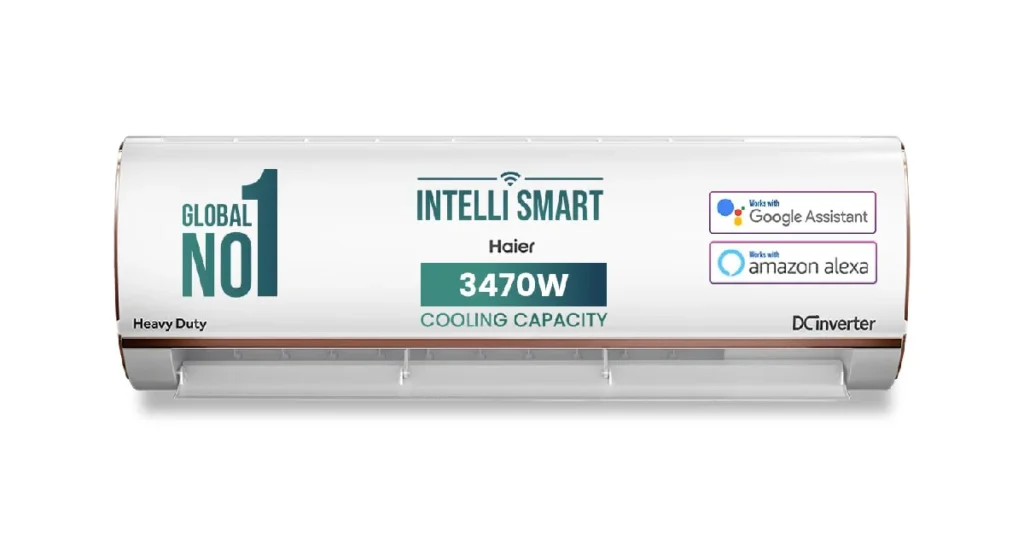
The Haier Intelli Convertible Split AC is designed for flexible cooling in varying conditions. Its convertible modes allow users to adjust capacity based on room requirements. With strong performance in high temperatures, it is ideal for hot climates.
Key Features:
- Intelli convertible technology
- Anti-bacterial filter
- High ambient cooling
- Durable copper condenser
Pros:
- Good for hot climates
- Reliable performance
- Competitive price
Cons:
- Limited smart features
Best For: Hot regions and consistent cooling needs
#5. Carrier Flexicool Split AC
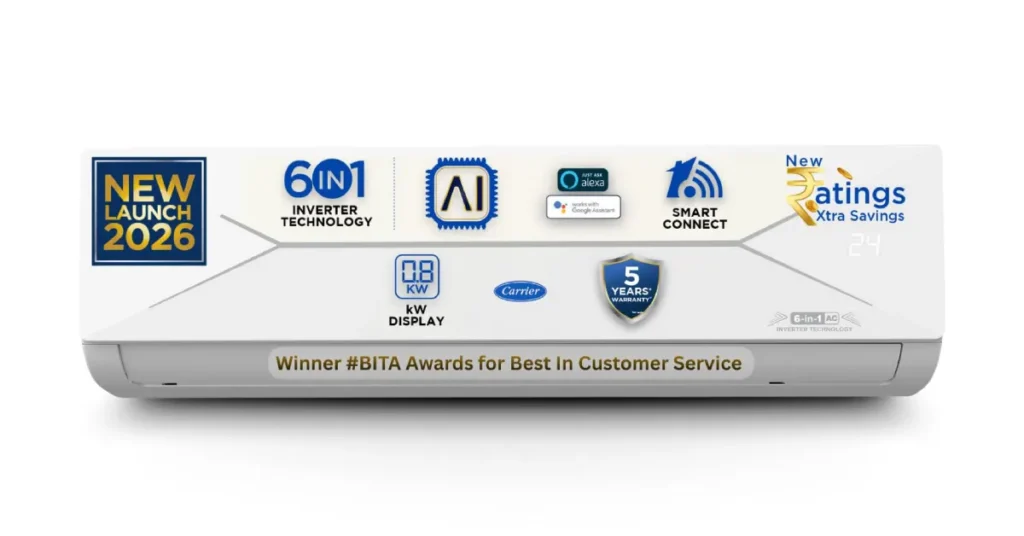
The Carrier Flexicool Inverter Split AC is a feature-rich mini split system built for smart and efficient cooling. It includes Flexicool technology that allows users to control energy consumption based on needs. With Wi-Fi connectivity and geo-fencing, it delivers a modern and convenient cooling experience.
Key Features:
- Flexicool technology
- Wi-Fi control
- Geo-fencing feature
- Energy-efficient inverter
Pros:
- Advanced smart features
- Energy efficient
- Strong brand reputation
Cons:
- Slight learning curve for features
Best For: Tech-savvy users
Common Myths About Mini Split Systems
“They’re only for small spaces.”
Not true. Multi-zone systems can handle entire homes.
“They’re too expensive.”
Upfront cost is higher, but long-term savings often make up for it.
“They don’t work in cold weather.”
Modern mini splits can heat efficiently even in low temperatures.
Also Read: Best AC Company in India
FAQs
What is a mini split heating and cooling system?
A mini split heating and cooling system is a ductless HVAC solution that uses an indoor unit and an outdoor compressor to control temperature. It delivers both heating and cooling without requiring ductwork. This makes it more energy-efficient and flexible compared to traditional systems.
How does a mini split system work?
A mini split system uses refrigerant to transfer heat between indoor and outdoor units. In cooling mode, it removes heat from inside your home and releases it outside. In heating mode, it reverses the process to bring heat indoors.
Is a mini split better than central AC?
Mini splits are often more energy-efficient because they don’t lose air through ducts. They also allow zoned cooling, meaning you can control temperatures room by room. However, central AC may be better for large homes with existing ductwork.
Are mini split systems suitable for all homes?
Mini splits work well for apartments, small to medium homes, and spaces without ductwork. They are also great for home additions and renovations. For very large homes, a multi-zone system may be required for full coverage.
Final Thoughts: Should You Choose a Mini Split System?
If you’re still asking, “What is a mini split heating and cooling system and is it right for me?” — here’s the honest answer:
Mini splits offer efficiency, flexibility, and modern comfort that traditional systems struggle to match.
They shine in:
- Energy savings
- Personalized comfort
- Easy installation
And let’s be honest — controlling your room temperature from your phone feels pretty futuristic.
Sources & Data Credibility
This article is based on verified information from reputable industry and government sources:
- U.S. Department of Energy – Ductless Mini-Split Systems
- Bureau of Energy Efficiency (BEE) – Star Rating Program
- Research Paper on Ductless Mini Split Systems
- Global HVAC & Mini Split Market Insights
Disclaimer
This article is for informational purposes only. Product details, pricing, and performance may vary over time. Some links may be affiliate links, and we may earn a commission at no extra cost to you. Always consult a professional before making installation or purchase decisions.
